
What the analysis includes
Gross examination: consistency, shape, colour, smell, visible admixtures (mucus, blood, undigested pieces). Chemistry: reaction (pH), occult blood, stercobilin, and bilirubin in infants. Microscopy: muscle fibres, connective tissue, neutral fat, fatty acids and soaps, starch, plant fibre, mucus, white cells, red cells, epithelium, yeast, helminth eggs and protozoa (if the test includes them).
The reference values look unusual: many lines are graded not with numbers but with words such as "absent", "single" or with "+", "++".
Digestion: fibres, fat and starch
Many undigested muscle fibres (creatorrhea) and much neutral fat (steatorrhea) suggest a shortage of pancreatic enzymes or food passing through too fast. Fatty acids and soaps point rather to impaired absorption or a lack of bile. Extracellular starch points to fast transit or a shortage of amylase.
A single finding after a fatty feast means nothing yet. If the coprogram hints at an enzyme shortage, the next step is stool elastase.
Inflammation and blood
Mucus, white cells and red cells on microscopy suggest inflammation of the bowel lining — infectious or chronic. But a coprogram is a crude tool here: calprotectin is used to tell inflammatory bowel disease from irritable bowel syndrome, stool culture and PCR panels to look for infection, and the immunochemical fecal occult blood test (FIT) to screen for tumours.
A positive "occult blood" in a coprogram (by the chemical method) can be false after meat, iron or with bleeding gums, so it is not used for screening.
Colour, pH and stercobilin
Stercobilin gives stool its brown colour. Its absence and pale, grey-white stool suggest that bile is not reaching the bowel (obstructive jaundice): a reason to see a doctor urgently. An acid reaction occurs with carbohydrate fermentation (for example, in lactase deficiency), an alkaline one with protein putrefaction.
Black, tarry stool may be a sign of bleeding from the upper digestive tract — if it is not explained by iron or bismuth preparations, emergency care is needed.
How to collect the sample
For 2–3 days, stop laxatives, rectal suppositories and oils, and do not have enemas; after an X-ray study with barium you need to wait. Eat as usual, without exotic foods. Stool is collected from a fresh bowel movement (not from the toilet bowl — onto paper, film or a clean container) with the spoon into a sterile container, without urine.
The sample is delivered to the laboratory within a few hours and kept in the refrigerator until then, not frozen; the exact time limit is set by the laboratory. In children, a sample can be taken from the inner surface of a diaper if the stool is formed.
What a coprogram can and cannot do
- Can: show impaired digestion of fats and proteins
- Can: hint at inflammation of the lining (mucus, white cells)
- Can: notice the absence of bile (no stercobilin)
- Does not replace: calprotectin, elastase, culture and the occult blood test
- Does not replace: a parasite test if it is not included
Several markers on your report?
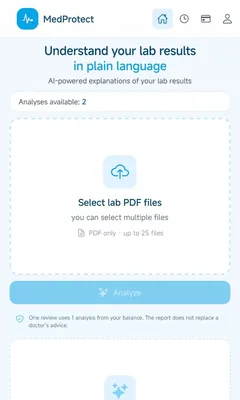
See how MedProtect explains results in the app: the whole report, a check of the recognized values, and a clear breakdown.
- Your whole lab report explained in plain language
- A health record: every test by date in one place
- Trends over time and questions for your doctor
- Only anonymised values go to the AI
Coprogram: frequently asked questions
How long can a stool sample for a coprogram be kept?
Is a special diet needed before a coprogram?
Yeast was found in the coprogram — is it candidiasis?
Coprogram in a child: what counts as normal?
Sources
- Fecal fat: MedlinePlus Medical Encyclopedia — MedlinePlus, National Library of Medicine. Accessed: October 21, 2026.
- White Blood Cell (WBC) in Stool: MedlinePlus Medical Test — MedlinePlus, National Library of Medicine. Accessed: October 21, 2026.
- Calprotectin Stool Test: MedlinePlus Medical Test — MedlinePlus, National Library of Medicine. Accessed: October 21, 2026.
- Stool Elastase Test: MedlinePlus Medical Test — MedlinePlus, National Library of Medicine. Accessed: October 21, 2026.