
How the diagnosis is made
Menopause is the last menstrual period; it is identified in hindsight, after 12 months without periods. Perimenopause is the years before it: cycles become irregular, hot flashes, sleep problems, mood swings and mucosal dryness appear.
In women over 45 with typical symptoms, hormone tests are not needed for the diagnosis. In perimenopause FSH and estradiol "jump": a single measurement can show both normal and menopausal values — and decide nothing.
When FSH is still needed
When periods stop or symptoms are pronounced before 40 (premature ovarian insufficiency) and at 40–45, FSH is measured twice 4–6 weeks apart. Persistently raised FSH together with low estradiol confirms declining ovarian function.
Hormonal contraceptives distort FSH — the test is interpreted with that in mind. AMH reflects the egg reserve and helps with fertility questions, but cannot predict the timing of menopause precisely.
What is ruled out
Cycle changes and hot-flash-like symptoms also occur in other conditions. So TSH (hypo- and hyperthyroidism), prolactin (hyperprolactinemia) and hCG (pregnancy is possible in perimenopause too) are checked, and with unusually heavy or prolonged bleeding, a complete blood count and ferritin plus a pelvic ultrasound.
A check-up in perimenopause
After menopause, LDL cholesterol, the risk of diabetes and bone loss increase. So it is useful to check lipids, fasting glucose or HbA1c, vitamin D and calcium, creatinine, and to discuss bone densitometry and age-appropriate cancer screening with a doctor.
If menopausal hormone therapy is planned, the doctor assesses risks from the history, blood pressure, lipids and clotting factors — a routine "hormone test" is not required to prescribe it.
Menopause tests by task
- Confirm menopause before 45 — FSH twice 4–6 weeks apart, estradiol
- Rule out other causes — TSH, prolactin, hCG
- Heavy bleeding — complete blood count, ferritin, ultrasound
- Check-up — lipids, glucose/HbA1c, vitamin D, calcium
- Bones — densitometry if the doctor decides
Several markers on your report?
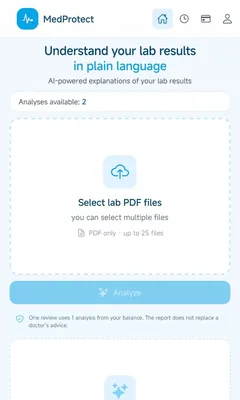
See how MedProtect explains results in the app: the whole report, a check of the recognized values, and a clear breakdown.
- Your whole lab report explained in plain language
- A health record: every test by date in one place
- Trends over time and questions for your doctor
- Only anonymised values go to the AI
Menopause tests: frequently asked questions
FSH is normal but I have hot flashes — so it is not menopause?
Which FSH level indicates menopause?
Do I need hormone tests before starting hormone therapy?
Can I get pregnant in perimenopause?
Sources
- Menopause: MedlinePlus — MedlinePlus, National Library of Medicine. Accessed: October 21, 2026.
- Follicle-Stimulating Hormone (FSH) Levels Test: MedlinePlus Medical Test — MedlinePlus, National Library of Medicine. Accessed: October 21, 2026.
- Estrogen Levels Test: MedlinePlus Medical Test — MedlinePlus, National Library of Medicine. Accessed: October 21, 2026.